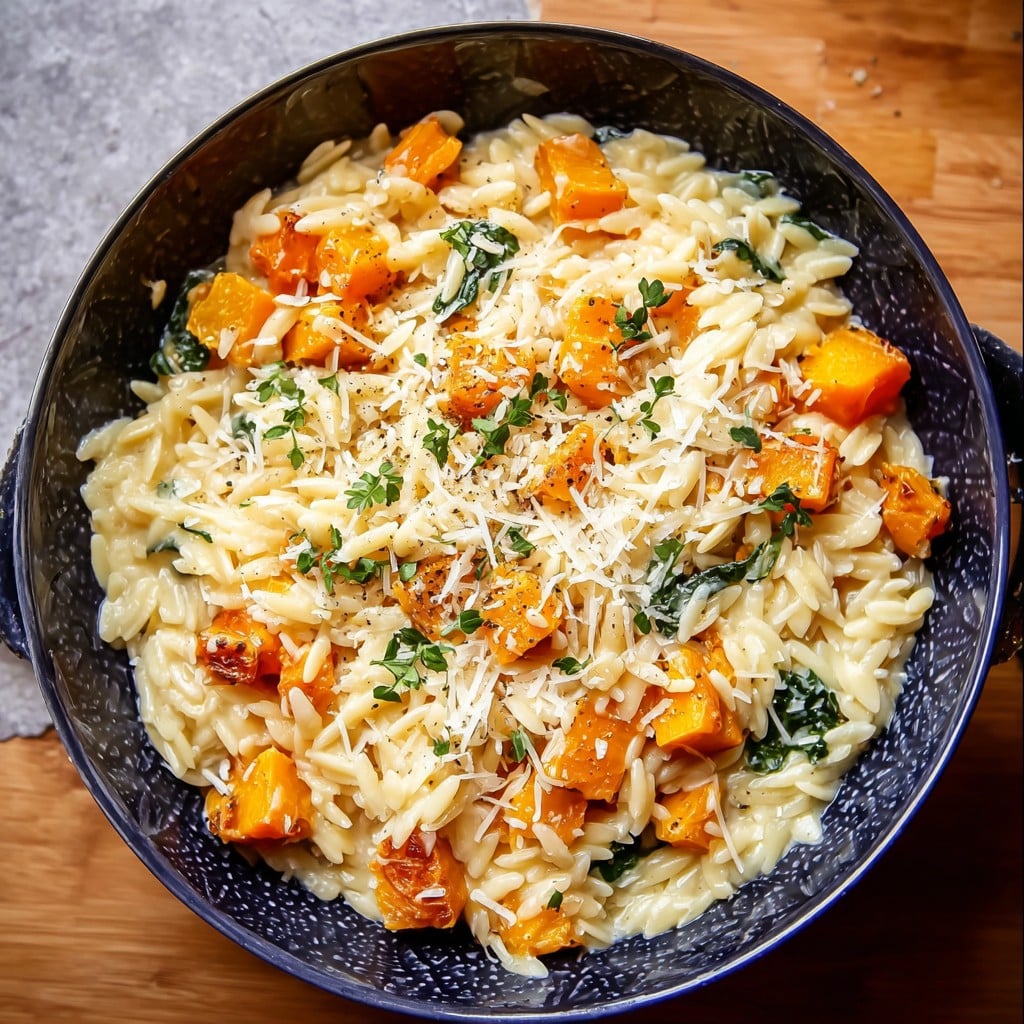
Creamy Orzo Pasta with Roasted Butternut Squash
When Comfort Food Meets Pasta: Where This Recipe Began
You ever start making dinner at 7pm because you lost track of time reading random food blogs? That’s pretty much how I stumbled into creamy orzo pasta with roasted butternut squash. I wanted something that felt cozy but also like, not boring (yawn, plain spaghetti). Anyway, the first time I threw this together, it was honestly because I had a sad butternut squash left over form an ambitious farmer’s market haul. The results? Let’s just say I ended up eating straight from the pot, standing in my kitchen, watching reality TV. Oh! And my friend Dan says this is actually better than his mum’s mac and cheese—so do with that what you will.
Why You’ll Love This (According to My Fam… and Me)
I make this whenever I want an easy win. My kids go crazy for the creamy sauce (they don’t even realise there’s veg in it, ha!) and, let’s be real, any excuse to eat pasta and call it a health food is a good one. If you’re over salads but also tired of stews, this just kinda lands in that sweet spot. Honest confession: I used to struggle with orzo sticking, but this recipe is nearly foolproof. Oh, and if you’re trying to impress someone, it looks fancy but really isn’t. Win-win. (One time I forgot the garlic and… didn’t even miss it. That said, I wouldn’t do that again.)
What You’ll Need (And What You Can Swap)
- One small butternut squash (about 700g)—I’ve even used pre-cut if I’m in a rush, but whole tastes sweeter somehow
- Two tablespoons olive oil (sometimes I just eyeball this, who actually measures?)
- Salt and pepper—my grandma swears by Maldon salt, but table stuff will do
- 1.5 cups (about 300g) orzo pasta (rice-shaped little pasta, but I’ve subbed in tiny macaroni when orzo was missing from the cupboard)
- Three cups veggie or chicken broth—any brand, honestly; homemade once, but didn’t change my life
- Half a cup (60ml) heavy cream (I’ve used crème fraîche in a pinch… worked fine, maybe even silkier?)
- Half a cup grated parmesan or pecorino (Pre-grated off the block is fine; but honestly, if you have some lurking in the fridge, go for it)
- One small onion, chopped (red works, yellow, even a leek if that’s what you’ve got—it’ll all melt in)
- Two cloves garlic, minced (I once used garlic powder and… just don’t. Fresh is best here)
- Splash of lemon juice (Totally optional, but it perks things up if you remember right at the end)
- Fresh sage or thyme (Optional, but wow, fresh sage is magic—just a few leaves)
How I Throw It Together (You Don’t Need to Stress!)
- Preheat your oven to 200°C (400°F). While things are heating up, peel and dice the butternut squash into bite-size chunks. Maybe pour yourself a cuppa—you’ll need a bit of patience here.
- Toss your squash on a baking tray (honestly, parchment makes life easier but not essential), drizzle with olive oil, sprinkle salt and pepper, and roast for maybe 25-ish minutes. Flip halfway if you remember. If not? Don’t sweat it—some crispy bits are fab.
- Meanwhile, in a big saucepan (I use my trusty old Le Creuset knock-off), heat a bit more oil. Toss in your onion, cook til soft but not brown (takes maybe 5-8 minutes). This is usually the point where I get distracted by texts and overcook, so eyes on the pot!
- Add the garlic. Just about 30 seconds until fragrant—don’t let it burn. Once, I left it in too long, the bitter taste hung around like an unwanted guest.
- Pour in your orzo and stir so it gets coated and maybe toasts a tiny bit—don’t panic if it sticks a bit at the bottom, just scrape it up while you stir.
- Gradually add in broth—about a cup at a time, like you would with risotto. Stir between pours. It’ll look soupy at first (don’t worry if it seems runny, the orzo will drink it up). This is when I sneak a bite. Takes about 12-15 minutes for the orzo to get soft but not mushy. Add more broth if needed.
- When orzo is creamy and cooked, pour in cream and most of your parmesan (save a little for topping). Stir, taste, add more salt/pepper or a squeeze of lemon if you like things zingy. Toss in most of your roasted squash. Mix gently so you don’t smash everything up, but honestly, smashed butternut squash isn’t the worst.
- Serve topped with remaining squash, parmesan, and a few torn sage leaves if you’ve got em.
Some Honest Notes (Stuff I Learned the Hard Way)
- If your orzo looks too dry, just splash in extra broth. I used to panic at the sight of clumpiness, but it always smooths out.
- I thought fresh sage was necessary, but honestly, the dish is rock solid even without herbs. So don’t trek out to a shop just for that.
- Lemon juice is my ace in the hole—just a little at the very end. Brightens up the whole thing.
Variations I’ve Tried (Some Great, One… Not So Much)
- Added spinach for color and vitamins—just throw in a few handfuls near the end. Turns the whole thing a lovely greenish hue, which my youngest once thought meant it was minty pasta (it’s not).
- Pancetta or crispy bacon crumbs on top: perfection. Tried chorizo once, but the smoky flavour was a bit much for me—maybe you’ll love it?
- Kafta (a Lebanese friend handed me some and I figured why not), but the spices kinda clashed. Probably wouldn’t do it again.
- I do recommend checking out this Serious Eats orzo method; it changed how I think about orzo forever.
Kitchen Stuff You Might Need (or Just Improvise)
- Baking tray for the squash—I’ve used a pizza stone, worked fine. Even a cast iron pan will do, to be honest.
- Saucepan—It says “heavy-bottomed” in recipes, but last week I totally used a regular nonstick. Worked okay, just keep the heat lower.
- Sharp knife for squash prep. Or borrow your neighbor’s—just bring them some leftovers as thanks!
- Wooden spoon or spatula for stirring (or a regular old spoon, truly)
How to Store Leftovers (If You Have Any…)
Pop leftovers in a container, toss it in the fridge. Lasts about 3 days supposedly, but honestly, it’s never made it past the next lunch for me. If it gets a bit thick, add a splash of water or broth before reheating and give it a good stir.
How I Like to Serve It (Family Style, of Course)
I serve it big-bowl style in the centre of the table; everyone grabs a scoop. Sometimes for a “fancy” feel, I scatter crispy sage leaves on top (7/10 for effect). Plus, garlic bread on the side is non-negotiable at my place. And if it’s just me, honestly, straight from the saucepan with Netflix on—no shame.
Little Nuggets I’d Tell My Past Self (So You Don’t Trip Up)
- Do NOT rush the squash roasting; I once tried upping the temp so I could eat sooner, but then ended up with a blackened mess. Trust the timing.
- If you let orzo sit too long after cooking, it’ll get stodgy. Have bowls ready and serve right away.
- Actually, I find it works better if you use just one cup of broth at a time, stirring in between. I once dumped it all in at once—it was fine, but less creamy.
Wait, You Asked: FAQ (For Real!)
- Can you make this dairy free? Yep! I tried swapping in coconut cream; it’s richer, but a little sweeter, so you might want to add extra lemon. Oat cream also works (shoutout Oatly Barista).
- Can I use frozen butternut squash? Totally. Just roast it straight from the freezer if you’re in a pinch. It might get a bit softer, but still tastes grand.
- Do I need to peel the squash? I mean, you technically could leave it, but then it gets tougher and chewier—it’s worth the effort to peel.
- Can I freeze this? Uh, I’ve never had leftovers long enough to try! But pasta can get strange after freezing, a bit gluey. Maybe not my first choice, but if you do, Bon Appetit has some freezing pasta tips here.
- Is orzo gluten-free? Most of the time, no—but I’ve seen some GF brands at the fancy grocery here in town, so worth a look if you need.
And if you’ve ever wondered what podcasts to listen to while you’re chopping onions, my sister turned me on to Home Cooking with Samin & Hrishikesh—background banter makes the most tedious bits much more fun. Anyway, hope you end up mid-pot in your kitchen, like me, just absolutely loving every bite (even if you have to wing a step or two). Cheers, mate!
Ingredients
- 1 medium butternut squash, peeled and cubed (about 3 cups)
- 2 tablespoons olive oil
- 1 teaspoon salt
- 1/2 teaspoon black pepper
- 1 small yellow onion, finely chopped
- 3 cloves garlic, minced
- 1 1/2 cups orzo pasta
- 3 cups vegetable broth
- 1/2 cup heavy cream
- 1/2 cup grated Parmesan cheese
- 1 tablespoon fresh thyme leaves (or 1 teaspoon dried thyme)
- 2 tablespoons chopped fresh parsley (for garnish, optional)
Instructions
-
1Preheat the oven to 400°F (200°C). Toss cubed butternut squash with 1 tablespoon olive oil, 1/2 teaspoon salt, and 1/4 teaspoon black pepper. Spread on a baking sheet and roast for 25 minutes, until tender and caramelized.
-
2Meanwhile, in a large skillet, heat remaining 1 tablespoon olive oil over medium heat. Add chopped onion and cook until soft and translucent, about 4 minutes. Stir in minced garlic and cook for 1 minute more.
-
3Add orzo pasta to the skillet and toast, stirring frequently, for 2 minutes. Pour in vegetable broth and bring to a simmer. Cook, stirring occasionally, until the orzo is al dente and most of the liquid is absorbed, about 10-12 minutes.
-
4Stir in the roasted butternut squash, heavy cream, Parmesan cheese, and thyme. Cook for 2-3 minutes until the mixture is creamy and heated through. Season with remaining salt and pepper to taste.
-
5Remove from heat and garnish with chopped fresh parsley, if desired. Serve warm.
Approximate Information for One Serving
Nutrition Disclaimers
Number of total servings shown is approximate. Actual number of servings will depend on your preferred portion sizes.
Nutritional values shown are general guidelines and reflect information for 1 serving using the ingredients listed, not including any optional ingredients. Actual macros may vary slightly depending on specific brands and types of ingredients used.
To determine the weight of one serving, prepare the recipe as instructed. Weigh the finished recipe, then divide the weight of the finished recipe (not including the weight of the container the food is in) by the desired number of servings. Result will be the weight of one serving.
Did you make this recipe?
Please consider Pinning it!!